Member Log In
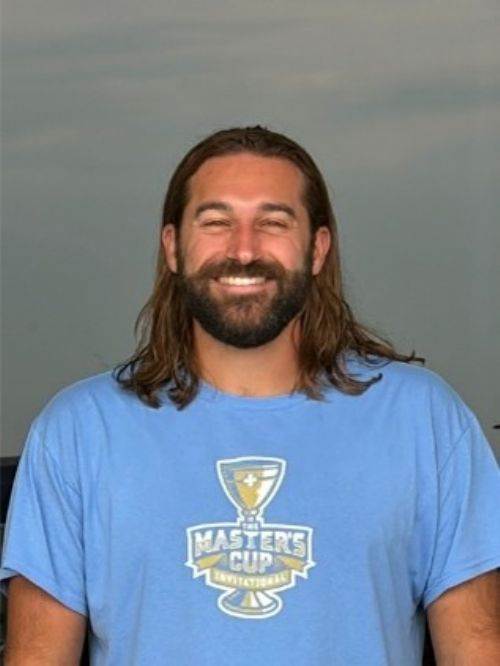
We connected over a late-morning brunch at Kolaches and Coffee at 119th and Metcalf on a Wednesday morning in early August. Nathan spent the summer doing Prayer in Action in the rural northeast Kansas town of Marysville, in the very northwest corner of the Archdiocese of Kansas City in Kansas. It turns out that Marysville is very near my roots near Seneca, KS. Nathan had spoken rather eloquently about his summer experience only the night before at the annual Seminarian Send-off, articulating that the experience was, for him, an extension of what has in part been a continual exercise in letting go of self-reliance.
We ordered an assortment of kolaches and drinks and found a table, settling quickly into a comfortable conversation. Nathan is a fellow who possesses the ability to convey familiarity almost from the first greeting.
One other thing about Nathan: he has a smile that won’t quit.
As I do with these interviews, I asked about his experience of a call to the priesthood.
At the outset, it’s likely important to establish that Nathan was baptized at St. Paul Church in Olathe. He is the oldest of three Laudan children; he has a younger brother and a younger sister. He grew up in Paola and the Laudan family went to Holy Trinity Church.
“My dad is a convert,” he said, as we turned to his faith formation as a child. “Fr. Keith Lunsford was our pastor for a few years when I was in elementary school. Watching him in his priesthood was certainly an attraction for me. He was joyous. He accompanied our family during that time. His priesthood was wonderful to witness.”
Laudan also mentioned the Ursuline Sisters’ presence in Paola, relating an experience of attending NCYC (National Catholic Youth Conference) in high school.
“We were asked to make a presentation to the parish,” he said.
Apparently, when the presentation was finished, one of the sisters approached him and promptly informed him of her opinion that he would be a ‘really good priest.’ Laudan that the nun added, “You have really good speaking skills.”
Nathan said he has no recollection of feeling called to the priesthood in his early years.
“It was never off the table, but I never felt called as a kid.”
“I had kind of a first inkling in my fifth year of college,” he offered as the first awareness of a call to vocational discernment. “I was giving myself some time to pause and reflect on what I really wanted to so,” he said.
He finished his undergraduate degree at K-State in May 2016, indicating that he’d had a terrific experience living in a fraternity and, upon graduation, he signed a three-year contract to work for the fraternity national organization. Nathan’s undergraduate degrees were in Food Science and Agriculture Communications. He carried a minor in Journalism.
“I originally thought I would go into the medical field,” he said, adding that after getting his first semester at K-State under his belt he shadowed his eye doctor, thinking he might want to become an optometrist.
“I quickly realized that I couldn’t spend all day asking patients which is better, 1 or 2, 5 or 6, or A or B,” he added with a laugh.
I was curious about his agriculture emphasis in collegiate studies.
“My parents both worked full time. We had a family hobby farm,” he noted. “Mom had an impactful experience with 4-H in her youth,” he said, indicating the importance of her influence in the family’s agricultural awareness.
“She decided the 4-H was going to be part of her children’s experience,” he related. “I grew up around agriculture and I showed livestock at the county fair,” he continued. “4-H was part of life.”
Laudan reflected that the idea of the priesthood was rolling around in his mind during his college years.
“If I could have predicted the future at that time, I would have said that I’d work for the fraternity for three years and, at the end of that time, I would have three options: the priest-thing, the wine-thing, or I would return to some sort of collegiate student development work.”
He noted that, while “the priest-thing” was among the options, it was surely the last option. He had not experience a “call,” but remained open to the idea.
I asked about the “wine-thing.”
“I had the experience of living with a great host family in France for a summer,” he related. “They owned the vineyard where I completed an agriculturally-related internship. I got the experience of helping out while I was with them.”
About the agricultural influence in his upbringing and throughout his college years, he spoke fondly.
Laudan enjoyed FFA (Future Farmers of America), 4-H, and AFA (Agriculture Future of America) at various points during his youth, and considered that working in developing students in agriculture would be interesting.
“I had a really blessed experience that I wouldn’t trade for anything.”
As his contract with the national fraternity organization ended, he found himself living in the Northland and was attending St. Therese Church in Parkville, MO.
“I was dating a woman,” he said, indicating the relationship had become serious to the point that he’d purchased an engagement ring. He indicated that she was a non-denominational Christian, curious about his Catholic faith. The relationship began in late 2020, after he had completed the three-year work commitment with his college fraternity’s national office.
At one point, she asked him why it was important to be Catholic.
“I’d never thought about it,” he said, admitting that he didn’t have an answer. After a two-and-a-half-year relationship in which he’d considered marriage, he decided to bring it to prayer.
“Lord, what do you think about our relationship?” he recalled asking.
Nathan indicated that he continued in the working world for five years after completing the fraternity commitment, a period during which, as the dating relationship developed, he relocated from the northland to Overland Park, where he began to attend Mass Queen of the Holy Rosary Church.
He recalled what he described as a “hit-over-the-head” moment that occurred there during Mass one day.
“It happened at the elevation of the Consecrated Host,” he said. “I heard Jesus say, ‘I want this to be you.’”
In reaction, Nathan indicated he bailed.
“I stopped going to Mass,” he said, adding that God doesn’t let go even if one attempts to run away.
“We eventually broke up,” he said, revealing that the dating relationship ultimately ended because of the persistence of the vocational call he experienced.
He spoke of his self-reliant nature, describing briefly the pain it tends to inject into circumstances at hand, not unlike what he experienced as he chose to pursue a priestly vocation.
“I decided I was going to the seminary,” he said. He related that he went to the vocation office and announced to then-Vocation Director, Fr. Dan Morris, that he was “ready to go in August.”
“Don’t quit your day job,” he recalled Father Dan’s response, indicating that Father Dan added, “You aren’t going anywhere.”
This was June 2023. Laudan was seven years removed from his college experience. He indicated that Fr. Dan counseled him about discernment being a joint process between the church and the individual responding to a perceived vocational call.
“I realized that I don’t get to choose this unilaterally,” Laudan acknowledged. “This is a ‘walking together’ time.”
Though a painful experience, he recognized the tremendous gift that has come in the wake of it.
He became part of the High Calling Program, a formation initiative by the Avila Institute.
“Had I gone to seminary right away, I would not have been ready to receive seminary experience,” he said. Laudan entered seminary the next August 2024.
I asked him about his biggest seminary challenge.
Nathan is studying at St. John Vianney (SJV) Theological Seminary in Denver. He entered his third year of studies in August. He noted that he will have at least four additional years after the current academic year.
The first year at SJV is known as a “Spirituality Year,” a time when the seminarian separates from society to focus on prayer and the interior life. He described the experience both as “wonderful” and “very challenging.” Technology time is limited and an intentional disconnect from the prior social framework is fundamental.
“I really didn’t want to leave my friends,” he said, sharing that he also held a number of roles on various volunteer boards and in other community service programs.
“It was hard to let go of all that,” he said.
He described what he termed another “painful” awareness that developed: the world one has known moves pretty well without one staying in it.
“I’m not necessary for all of that to happen,” he said, the realization of being completely dispensable etched in his expression. He reflected a sense of joy at the moment.
“That sucked to here,” he said, raising his left arm to about the height of his shoulder.
Yet, he also described the ever-prevalent discovery of God’s sense of humor, especially in the silence of retreats that occurred throughout that year.
“I don’t think I ever had the experience of God’s humor as I have in silence,” he mused. “The world turns without me in it. And, if that is the case, what else is there to do except whatever He wants me to do for His sake?”
Another challenging experience of that first year was the Poverty Immersion. This is a one-month period in which the seminarian is sent to a community setting to encounter the faces of poverty in all their expressions. Laudan went to Pacifica, CA, in the San Francisco Bay area, to work with the Missionaries of Charity, the order founded by St. Teresa of Kolkata.
“These sisters truly have removed themselves from the world,” he observed.
He described their lives as a true death to self. He related having heard one of the sisters say of her experience, “I’m living every day for the Lord’s work.”
He marveled at the amount of joy he witnessed in the sisters, even as they live and work in a hospice environment caring for the dying, many of whom are homeless and have no family. He spoke of the experience of caring for some of the poorest people in the world, right in the San Francisco area.
“I had never done work with a religious community before this,” he said.
Laudan related a particular story of a resident who liked to have orange juice every morning. The sisters, he noted, rely completely on the generosity of others for everything, including the orange juice for breakfast.
“We were running out of orange juice,” he noted, indicating that he spoke to one of the sisters about the dilemma, acknowledging to her that the resident would likely be rather dismayed if he didn’t get his orange juice.
“Have you prayed about it, yet?” he recalled the sister asking him.
“Sure haven’t,” he recalled thinking at the time.
The next morning, a local grocery store staffer appeared at the door with orange juice—and not just a quart of it—that could not be sold as it was soon outdating.
“Prayer in Action this summer was the same way,” he said. “I experienced the power of prayer in such a tangible way many times over the course of our time in Marysville.”
“Of course,” he said, “the Holy Spirit is moving. God listens to us.”
He considers himself a work in progress when it comes to learning how to rely more on God and less on himself. And he fully realizes it’s a work that won’t be completed in this lifetime.
As we continued to make our way through a plate of kolaches and a coffee refill, I asked about any standout moments in the first two years.
“While I don’t recall singular moments,” he began in response to my query, “the beautiful thing about my seminary experience has been the multiple anchor points along the way—a lot of peace and consolation that I’m where I’m supposed to be.”
He spoke of the experience of being home in Paola during Holy Week in late March/early April of this year.
“I don’t think I had been home for all of Holy Week maybe since high school,” he commented.
He appreciated the Chrism Mass, his first ever, and recalled thinking, “I want this,” as he witnessed the solemn Chrism Mass liturgy.
“My parish in Paola (Holy Trinity) had nine people enter the church at Holy Saturday,” he said, indicating his belief that it must have been a record.
“I got to be there for all of that, serving as a Master of Ceremonies for Fr. Joe (Sellas), getting all the details tended to,” he recalled an experience that left him tired but energized.
“I would not have wanted to do anything else,” he said.
I asked about any advice he might have for a reader who might have a son or a grandson contemplating a priestly call, and advice that he might give to any man living the experience.
‘Patience’ was the theme of his reply to both.
He spoke of his great grandmother, a family matriarch, who eagerly awaited a vocation among her children, grandchildren, and great-grandchildren. He recalled going to her house regularly after school, which was located right near the church and the school in Paola. He described walls dominated by photos of family, each wall dedicated to a different child, grandchildren, and great-grandchildren. He spoke of her witness of faith, even as she experienced children and grandchildren falling away from the Church.
“Knowing that faith was important to her as she patiently prayed for her family,” he observed. He knows that, even now, she’s praying for him from her eternal home.
Regarding any man contemplating a vocational call, Nathan spoke of the importance recognizing that human time is often not God’s time. He encouraged patience once again, acknowledging that God will not waste a single life experience as His plan unfolds.
“So what if the timing is beyond what you think?” he asked rhetorically.
Nathan specifically expressed sincere gratitude to the Serra Clubs and Serrans in the archdiocese.
“One of the big plusses for us seminarians is the realization of how much support we have at home,” he said, indicating that such is not the case in other dioceses.
“I come away from my experience every summer feeling so blessed by the support we have,” he observed. “It’s very real.”
He recalled the annual Serra seminary visit that happened at SJV during his first year of seminary studies.
“Most of my seminary classmates were floored that a group of people would make the eight-hour trip just to see the seminary, interact with us, and see for themselves how things happen at the seminary,” he said with a big smile. “No other diocese in my experience is doing that.”
He also spoke of the importance of Quo Vadis and the Love’s Reply discernment retreats, again specifically calling out the importance of the behind-the-scenes prayer done by Serrans as those events unfold.
“It will bear fruit,” he said with complete confidence.